

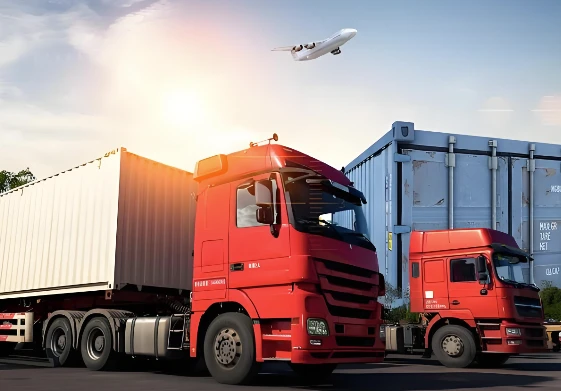
Pengcheng Yunqi (Shenzhen) Supply Chain Co., Ltd. is one of the most reliable southeast asia logistics line suppliers in China. We provide premium air freight dedicated lines and sea freight dedicated lines with low price. We ensure efficient, stable, end-to-end flow for cross-border shipments.
Southeast Asia Logistics Line
Our Southeast Asia Logistics Line connects exporters and importers across the ten ASEAN member states through a single coordinated cross-border network. Built around regional economic integration, this service links factories, ports, and distribution centers from Singapore to Myanmar without requiring separate providers in each country. Shippers gain one contract, one tracking view, and one invoice spanning heterogeneous markets that differ in language, currency, and customs procedure. Manufacturers, trading houses, and e-commerce suppliers use the network to reach consumers from Bangkok to Manila under one operational framework. The line is designed for businesses that sell across borders but want to avoid managing a different logistics partner in every country.
Service Details
The service operates along the region's principal trade corridors, covering Singapore, Malaysia, Thailand, Vietnam, Indonesia, the Philippines, Cambodia, Myanmar, and Laos. Cross-border road movements run on the ASEAN highway network and the Thailand–Malaysia–Singapore land bridge, while sea feeders connect peninsular and island economies. Northern corridors link the Greater Mekong Subregion through Laos and Cambodia into Thailand, while southern routes connect Penang and Johor with Singapore's transshipment hub.
Within the Southeast Asia Logistics Line, cargo consolidation takes place at hub cities: Singapore, Bangkok, Ho Chi Minh City, and Jakarta. From these nodes, shipments are deconsolidated for national distribution. RCEP and ACFTA provisions are applied at origin so that tariff treatment and rules-of-origin documents are coordinated before goods reach multiple ASEAN customs jurisdictions, cutting clearance friction at every border crossing.
Multimodal routing combines short-sea shipping, regional road transport, and emerging cross-border rail links such as the Kunming–Singapore railway corridor. For archipelagic destinations, Indonesia and the Philippines are reached through sea feeder services into secondary ports, followed by local last-mile delivery to final consignees.
Company Advantages
Managing freight across nine diverse jurisdictions usually means juggling many local agents, but the Southeast Asia Logistics Line replaces that complexity with a single regional account. One relationship covers customs coordination, corridor planning, and delivery across every market we serve. Clients receive a dedicated regional coordinator who monitors every leg and resolves exceptions before they delay delivery.
Customers benefit from unified documentation, consolidated billing, and a consistent service standard from Hanoi to Manila. Our hub-and-spoke model keeps transit predictable even when individual countries apply different import rules. By pre-aligning RCEP and ACFTA preferences at origin, we help importers capture preferential duty rates without reworking paperwork at each frontier. The result is faster cross-border movement and clearer landed cost across the whole ASEAN footprint. Transparency improves because one data feed shows inventory in transit, at hub, and on final delivery.
To begin, share your lane, volume, and target markets, and we will map a regional plan that consolidates your ASEAN freight under one account.
FAQ
Q: Which Southeast Asia countries and corridors does the line cover?
A: The network spans Singapore, Malaysia, Thailand, Vietnam, Indonesia, the Philippines, Cambodia, Myanmar, and Laos, using the ASEAN highway network, the Thailand–Malaysia–Singapore land bridge, and regional sea feeders. Cross-border trucking handles the peninsula, and feeders reach the islands.
Q: How do you handle customs and tariffs across many different ASEAN countries?
A: We apply RCEP and ACFTA rules of origin at the point of export, coordinating tariff documentation so each customs jurisdiction receives consistent, prefiled paperwork that speeds border clearance. This avoids duplicate filing and lowers the risk of duty miscalculation.
Q: Can one shipment move multimodally across the region?
A: Yes. Shipments combine short-sea vessels, cross-border trucks, and rail segments such as the Kunming–Singapore corridor, with routing chosen by corridor efficiency rather than a single mode. We select the cheapest reliable path for each segment rather than forcing one method.
Q: How do you serve island markets like Indonesia and the Philippines?
A: Sea feeder services deliver into secondary ports, then local partners complete last-mile distribution to consignees across the islands. This bridges the sea leg and inland distribution without a separate provider.
Q: Do you provide consolidation hubs and cross-border trucking, or full door-to-door?
A: Both. We consolidate at Singapore, Bangkok, Ho Chi Minh City, and Jakarta, offer cross-border trucking, and can extend to complete door-to-door delivery. Door-to-door includes pickup at origin and proof of delivery at destination.


